
Digital marketing for mental health clinics
Getting people to your website only matters if the rest of the system gets them into care.
The person searching for help may not know whether they need weekly therapy, psychiatry, an IOP or a specialty program. They may be comparing insurance, location, availability, credentials and treatment approach while trying to make a decision they have already put off.
Meanwhile, the clinic has its own operational reality. One therapist may be full while another needs patients. Psychiatry may have a waitlist while a new trauma program needs visibility. One location may have capacity while another cannot take another referral.
Answered in minutes, not days, by a partner, not an "account rep"

Behavioral health digital marketing since 1999
What the clinic needs to grow
Growth should follow capacity. If couples therapy is full, there is little reason to keep increasing demand for it. If a new psychiatrist joins, search, paid media and website visibility can shift toward that provider. If a second location needs volume, local strategy should move with it.
What the patient needs to choose care
A patient should be able to move naturally from problem, to service, to provider, to appointment. A referral source should be able to determine whether your clinic fits the person they are trying to place.
Mental health marketing starts with the growth problem
Most agencies start with the channel they sell. We start with the business. Before recommending SEO, paid media, website work or another campaign, we want to know:
- 01Which providers have capacity?
- 02Which services need growth?
- 03Which locations have room?
- 04Which populations are the right clinical and financial fit?
- 05Where are new patients coming from now?
- 06Where are qualified inquiries getting lost?
- 07Which parts of the organization are already full?
A growing outpatient clinic may need stronger local visibility, better provider pages and routing based on clinician availability. A psychiatry practice may need visibility for ADHD evaluations or medication management. An IOP may need to reach a much smaller pool of appropriate patients over a longer referral and decision process. Those organizations should not receive the same marketing package.
One connected experience, not three separate projects
"EMDR therapist near me."
knows exactly what they want
"Why can’t I stop having intrusive thoughts?"
only knows what they feel
"Do I need an IOP or weekly therapy?"
comparing levels of care
Increasingly those questions get asked through ChatGPT and other generative tools before anyone reaches a clinic website, which is why AI search optimization is part of the same work. A strong presence connects:
- Conditions and concerns→the services that treat them
- Services→the clinicians who provide them
- Providers→specialties, modalities and locations
- Locations→availability and local search
- Treatment options→a clear next step
- Insurance, telehealth and scheduling→the decision itself
Lead volume stops the analysis too early
A form can be submitted and sit unanswered. A prospective patient can leave a voicemail and call three other clinics before someone responds. An intake coordinator can receive an inquiry without knowing which provider has openings. An ad platform can count a conversion even though nobody knows whether that person scheduled.
For larger clinics the bigger problem is usually fragmentation. The website uses one system. Scheduling uses another. Clinical data lives in the EHR. Call tracking has its own dashboard. Nobody can confidently answer which marketing efforts are producing appropriate new patients. Connecting the pieces is part of digital marketing now, which is why we also handle marketing automation and marketing technology.
- 01Website forms and scheduling
- 02Call tracking and response
- 03Provider availability
- 04Lead and patient routing
- 05CRM systems
- 06Follow-up workflows
- 07Analytics and attribution
- 08EHR and scheduling integrations
- 09Marketing automation
- 10Reporting across channels
Behavioral health is not a vertical we recently discovered
Webconsuls has worked in digital marketing since 1999 and has spent decades around addiction treatment, mental health, therapy, psychiatry and complex healthcare. That history gives us perspective that cannot be created by adding "healthcare" to an agency services page.
More than a vendor. In lockstep for the path ahead.
- 01A high lead count can hide poor lead quality.
- 02A high-ranking website can still fail to fill the service line that matters.
- 03Beautiful design can still create unnecessary friction.
- 04More media cannot solve limited capacity.
- 05A marketing problem may turn out to be a positioning, intake, website or technology problem.
Behavioral health partners we have kept visible for a decade or more
Long-term relationships across treatment programs, outpatient clinics and specialty behavioral health care.
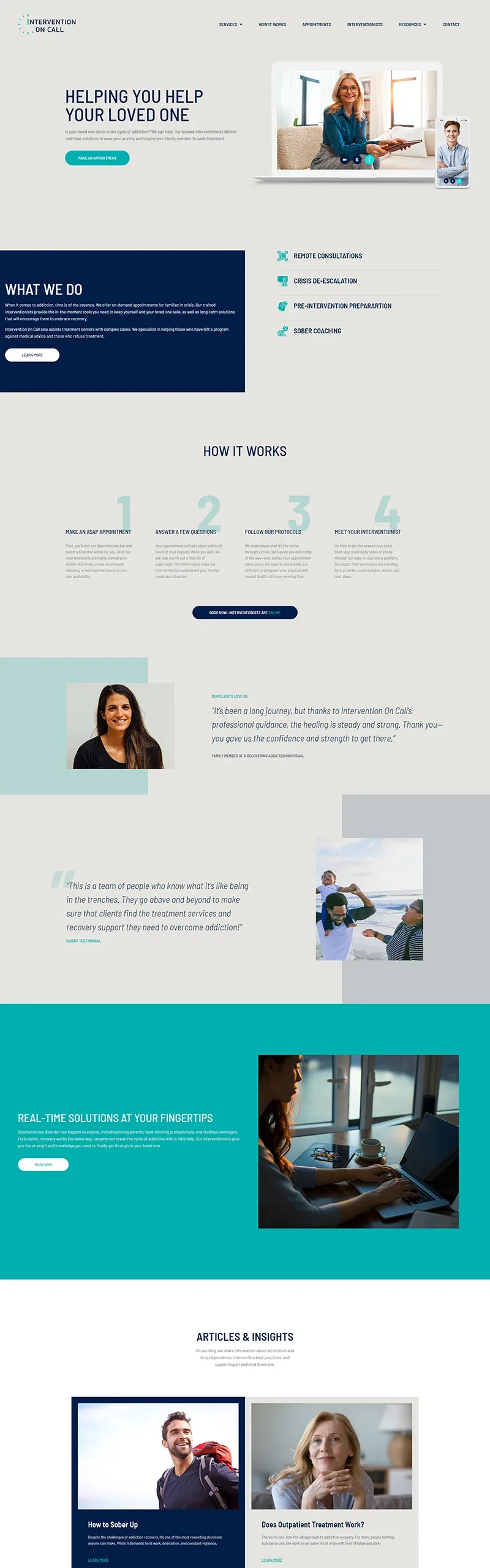
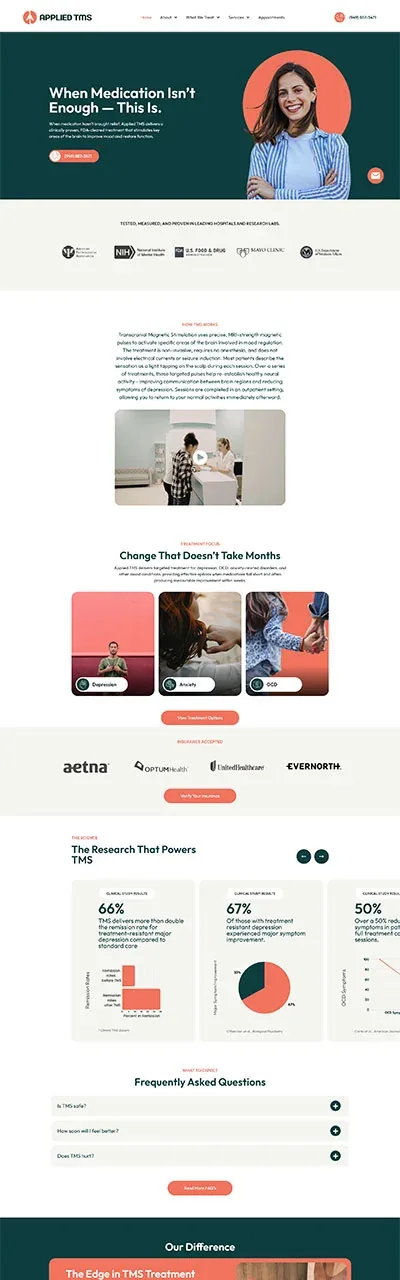

01What is digital marketing for mental health clinics?+
Digital marketing for mental health clinics includes the website, search visibility, paid media, local presence, content, reputation, analytics and the technology used to help appropriate prospective patients find, evaluate and contact a clinic.
02How is mental health marketing different from general healthcare marketing?+
Prospective mental health patients may not know which provider, modality or level of care they need. They often compare specialties, provider fit, availability, insurance and treatment approach before contacting a clinic, which makes clear service architecture and education especially important.
03Does Webconsuls work with psychiatry and therapy practices?+
Yes. Webconsuls works across behavioral health, including therapy centers, psychiatry practices, specialty outpatient programs, mental health clinics and larger treatment organizations.
04Can you help grow specific providers, programs or locations?+
Yes. We align search visibility, paid campaigns, provider pages, local SEO and website pathways with the areas of the clinic that have capacity and need additional demand.
05Can Webconsuls manage more than SEO and advertising?+
Yes. We also support website operations, AI search visibility, analytics, call tracking, CRM implementation, automation, marketing technology and intake-routing infrastructure.
06How does AI search affect mental health clinics?+
People increasingly use ChatGPT and other AI platforms to research conditions, treatment options and providers. Clear information about services, clinicians, credentials, locations and patient populations helps both search engines and generative systems understand and accurately represent a clinic.
07Why does intake matter to a digital marketing agency?+
Because generating an inquiry has limited value if the patient cannot reach someone, gets routed incorrectly or never schedules. Marketing performance should be evaluated beyond the form submission whenever the clinic's systems allow it.
08Does Webconsuls guarantee patient growth?+
No. We manage the strategy, execution and digital infrastructure within our control. Patient growth is also influenced by demand, clinical fit, availability, insurance, pricing, reputation and the clinic's intake operation.